
Clothing and Identity: What Your Outfit Says Before You Speak
A cross-cultural look at millennial women in South Korea and Mongolia.

Hook
Clothing is never just clothing. It can be a confidence boost, a cultural signal, a social shield or a way to say: this is who I am.
Before we even speak, our outfit already sends a message. But that message is not understood the same way everywhere.
This study compares millennial women in South Korea and Mongolia to show how culture changes the meaning of fashion.
What the study looked at
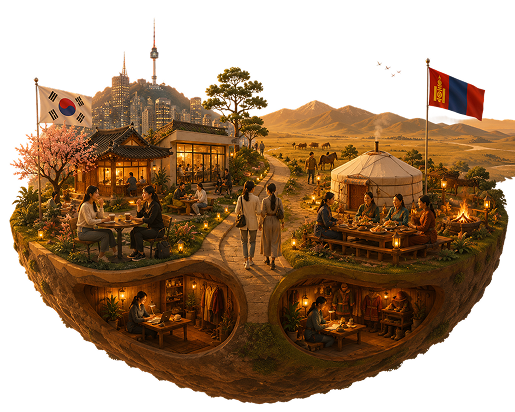
Both groups belong to the same generation, but they live in very different cultural environments.
South Korea is known for fast-changing trends, beauty culture and a strong focus on social appearance.
Mongolia has a deep connection to tradition, heritage and personal identity.
South Korea: fashion as social image
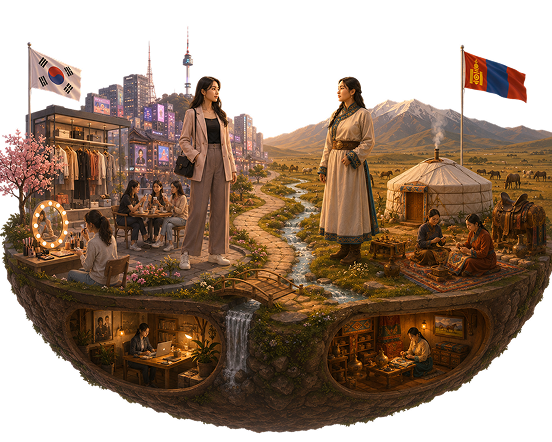
For South Korean millennial women, clothing is closely connected to social image. The study shows that fashion is linked to how others judge you, how well you fit in and how successfully you present yourself in public.
In South Korea, fashion trends can move quickly. Being well-dressed and up to date may be seen as a sign of effort, competence and social awareness.
This connects to collectivist cultural tendencies. Clothing becomes part of a social system. It is not only about asking, “Do I like this?” but also, “How will this be seen?”
Mongolia: fashion as personal identity
Mongolian millennial women showed a different pattern. For them, clothing was more strongly connected to self-expression, identity and tradition.
Instead of dressing mainly for social approval, clothing becomes a way to show personality and stay connected to cultural roots.
Fashion can connect the present version of the self with family, culture and memory.
Main takeaway
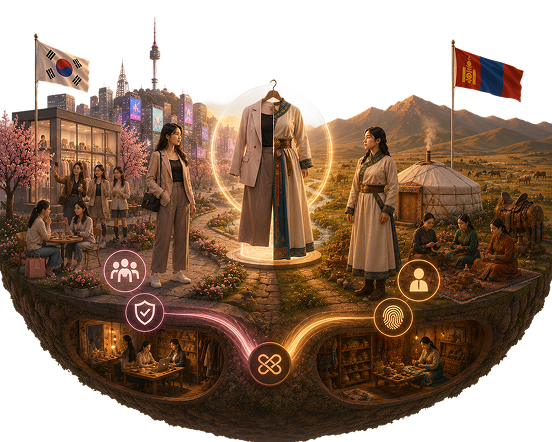
The visual comparison showed that South Korean women scored higher on social image, while Mongolian women scored higher on identity.
Fashion is not universal. The same item can mean social belonging in one context and personal freedom in another.
In South Korea, the outfit can work like a social passport. In Mongolia, the outfit can work more like a personal signature.
Get in Touch
We are here to help.
Send us a message and we’ll get back to you soon.


