
Culture, Digital Life and Sports: Why Fitness Is Not Just About Motivation
A look at sports participation in Asia after the pandemic.


Hook
Fitness apps, online workouts and sports communities make it look like everyone can train in the same way from anywhere. But culture still matters. A workout trend that feels motivating in one country may feel uncomfortable, unfair or simply irrelevant in another. This article looks at how cultural values and digital transformation shape sports participation in Asia after the pandemic.
Why the study looked at
The article is based on a research debrief comparing two texts. The first is Xianger He's study on cultural diversity and digital transformation in sports participation patterns in Asia's post-pandemic era. The second is Gill's theoretical work on Culture, Complexity and Informing. Together, they show both real-world data and a deeper framework for understanding how culture shapes behavior.

Why this matters
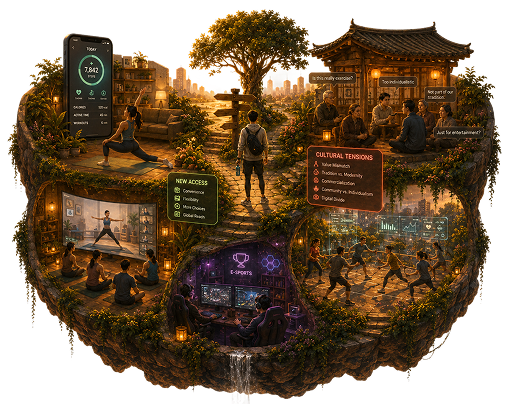
After COVID-19, many people changed how they exercised. Some moved to fitness apps, online classes, e-sports or hybrid forms of sports. Digital tools created new access, but they also created cultural tensions. Not every digital fitness format fits every social value system.
The cultural framework
Both texts use cultural theory, especially Hofstede's cultural dimensions. These include individualism versus collectivism, power distance and uncertainty avoidance. These dimensions help explain why people in different societies may prefer different sports formats, group structures or levels of competition.
For example, collectivist cultures may support group-based sports because people value shared activity and community. High power distance can influence who gets access to sport, whose participation is encouraged and whether gender inequalities appear. Culture acts like a hidden rulebook for what feels normal.
Extra data sources
The qualitative part included 40 semi-structured interviews with professionals such as e-sports coaches, fitness app developers and policymakers. These interviews were analyzed using NVivo. The study also included text mining of 100,000 social media comments from platforms such as Twitter and Weibo, using topic modeling techniques. This gave the research a stronger connection to real online conversations.

Gill's theoretical contribution
Gill's work adds a broader framework. It explains that culture influences communication, decision-making and performance in complex environments. One important concept is the bias filter model. This model suggests that information must pass through mental filters such as attention, cognition and motivation before it influences a person. Culture shapes these filters.
Gill also uses the fitness landscape model to explain how people and organizations search for good solutions in complex environments. Culture can help guide decisions, but it can also limit exploration if people stay too close to familiar patterns.
Strengths and weaknesses
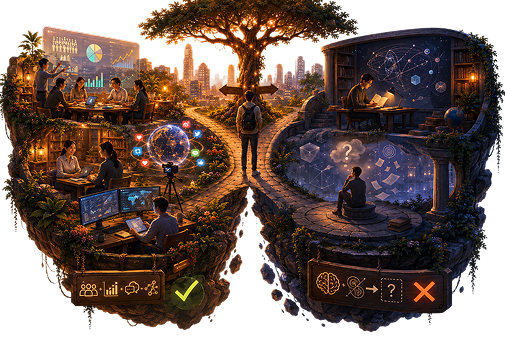
He's study is strong because it combines a large sample, statistical methods, interviews and social media analysis. This makes the findings practical and current. Gill's framework is valuable because it explains deeper mechanisms, but it is more abstract and does not test one specific real-world context.
Main takeaway
The study found that culture remains a central factor in sports participation, even in a highly digitalized environment. Collectivist cultures in East Asia were linked to stronger group sports participation. High power distance in South Asia was connected to gender inequalities in participation. Southeast Asia showed more flexibility and openness to hybrid sports forms.
Digitalization had a dual role. On one hand, it increased access to sports through fitness apps, online platforms and virtual competitions. On the other hand, it created conflicts when digital content did not match local values. For example, a fitness app designed for an individualist audience may not work well in a culture where group belonging or social approval matters more.
Get in Touch
We are here to help.
Send us a message and we’ll get back to you soon.


