
Student Lifestyle: Australia vs. Thailand
Same life phase, different daily habits, values and priorities.

Hook
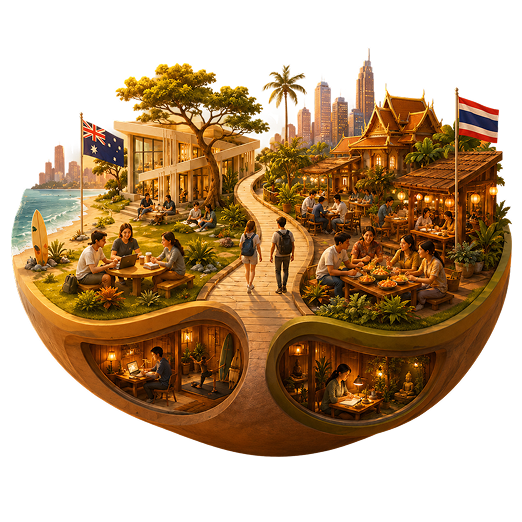
Student life can look similar on the surface: lectures, friends, stress, free time, food, maybe too little sleep. But the deeper lifestyle patterns behind student life can be very different across cultures. This study compares undergraduate students in Australia and Thailand and shows how culture shapes what young people value in everyday life.

Why this matters
University students are in a transition phase. They are no longer children, but not always fully settled adults either. During this stage, many habits become stronger: health behavior, social routines, spending patterns, nightlife, studying habits and ideas about the future. That makes students an important group for understanding lifestyle development.
The study defines lifestyle as a unique pattern of individual characteristics, behaviors and habits chosen by a person based on socio-economic conditions and cultural background.
The six lifestyle categories
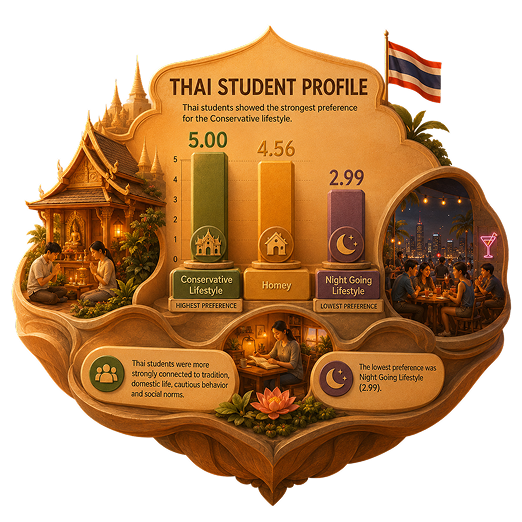
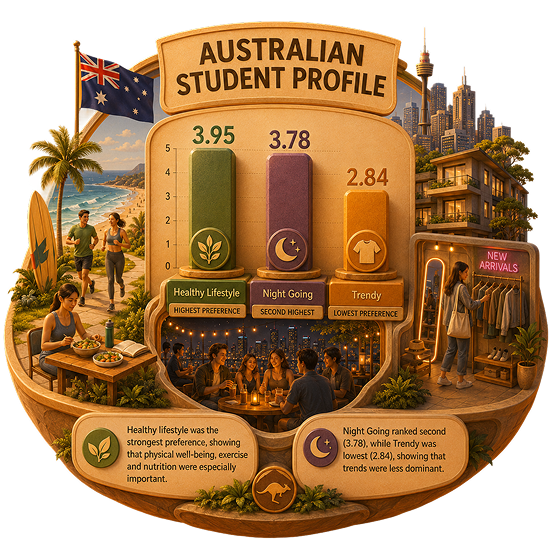
The study measured Homey, Night Going, Hedonistic, Trendy, Conservative and Healthy lifestyles. A Homey lifestyle includes domestic activities such as cooking, gardening, religious activities or intellectual interests. Night Going describes a preference for dancing, drinking and nightlife. A Healthy lifestyle focuses on sports, exercise and nutrition.
Thai student profile
Thai students showed the strongest preference for the Conservative lifestyle, with a mean score of 5.00. Their second highest category was Homey, with a mean score of 4.56. These results suggest that Thai students in the sample were more strongly connected to tradition, domestic life, cautious behavior and social norms.
Cultural explanation
The researchers explain the differences through the contrast between Western and Eastern cultural norms. Western culture is described as more connected to assertiveness and decision-making, while Eastern culture may lean more toward contemplativeness and followership. These broad cultural patterns help explain why Australian students scored higher on health and social nightlife, while Thai students scored higher on conservative and homey lifestyles.
Australian student profile
Australian students showed the strongest preference for the Healthy lifestyle, with a mean score of 3.95. This suggests that physical well-being, exercise and nutrition were especially important to them. Their second highest category was Night Going, with a mean score of 3.78.
Main takeaway
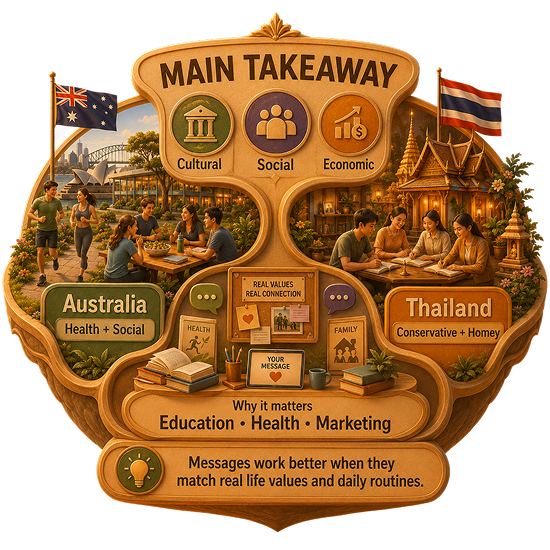
Lifestyle development is shaped by cultural, social and economic factors. Australian students in this study prioritized health and social engagement, while Thai students showed stronger conservative and homey lifestyle patterns. Young people respond better to messages that fit their real-life values and daily routines.
Get in Touch
We are here to help.
Send us a message and we’ll get back to you soon.


