
Body Image, Bullying and School Safety: What Shapes Teen Mental Health?
A cross-cultural study of adolescents in Japan and Russia.


Hook
Teen mental health is not only about what happens inside someone's head. It is also shaped by the body they live in, the school they go to, the people around them and the culture they grow up in. This study compares adolescents in Japan and Russia and looks at three major factors: body image, bullying victimisation and perceived school safety.
Why this matters
Adolescence is a bridge between childhood and adulthood. During this time, young people go through biological, psychological and social changes. They may experiment with new habits, compare themselves more with others and become more sensitive to peer judgement. This makes adolescence a key period for understanding mental health and designing early support.
The study also fills an important gap. Much research on adolescent mental health has been done in Western countries. By comparing Japan and Russia, the researchers add a broader cross-cultural perspective. Japan and Russia are both non-Western contexts, but they differ in history, social structure and cultural values.

What the study measured
The main mental health measure was the Strengths and Difficulties Questionnaire, also called the SDQ. It is a widely used 20-item tool that measures emotional symptoms, conduct problems, hyperactivity and peer problems. To avoid overlap with the bullying questions, the bullying-related item in the SDQ was removed for this analysis.
The study also measured body image and eating distress using an 8-item scale based on DSM-IV criteria. Bullying victimisation was measured with three questions about verbal, physical and psychological bullying experienced at school over the past six months. School safety and care were measured with a 4-item scale about how safe students felt and how much care they perceived from teachers and peers.

Mental health findings
Overall, Japanese adolescents reported higher total difficulty scores than Russian adolescents. But the full picture is more complex. In both countries, girls reported more mental health problems than boys. The cross-cultural difference in total difficulties was significant only for boys. Japanese boys scored higher than Russian boys, while the difference between Japanese girls and Russian girls was not significant.
Body image findings
Body dissatisfaction was a gender-specific issue across both cultures. Girls in both Japan and Russia reported significantly higher body dissatisfaction than boys. Russian adolescents reported much higher body dissatisfaction and eating distress than Japanese adolescents. The cross-cultural differences among boys were larger than the differences among girls.
This finding is important because body image is often discussed as a mostly female issue, but the study shows that boys are also affected and that cultural context can change how strong the issue appears.
Bullying and safety findings
Russian adolescents reported significantly higher levels of bullying victimisation than Japanese adolescents. In both countries, boys generally reported more victimisation than girls. However, Japanese adolescents rated their school safety lower than Russian adolescents. This creates an important contrast: Russian students reported more bullying, while Japanese students felt less safe at school.

The strongest mental health factor
Body dissatisfaction emerged as the strongest correlate of total mental health difficulties in the multivariate model. This means that, among the factors studied, body image had the strongest connection with mental health problems. The authors suggest that pressure to conform to specific body ideals may contribute to eating distress, depression and broader psychological symptoms during early adolescence.
School safety as protection
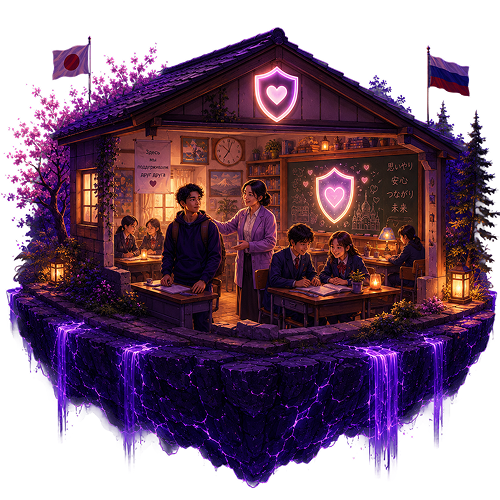
School safety was also a significant protective factor. Students who felt safer and more cared for at school tended to report fewer mental health problems. Interestingly, the protective effect of school safety was larger for girls than for boys in both countries. This may mean that girls are especially sensitive to the emotional climate and support they experience at school.
Bullying works differently across cultures
The link between bullying victimisation and mental health was moderated by both gender and culture. In Japan, the negative impact of bullying on total difficulties was much stronger for girls than for boys. In Russia, the effect was stronger for boys than for girls. This shows why mental health support cannot simply be copied from one culture to another.
A possible explanation for higher bullying in Russia is a stronger emphasis on traditional gender roles and power hierarchies. Japan, on the other hand, is described as a tighter culture that values conformity and social order. These cultural differences may shape who is targeted, how bullying is experienced and how strongly it affects mental health.
Main takeaway
Teen mental health is shaped by personal, social and cultural factors. Body dissatisfaction was the strongest correlate of mental health difficulties. Bullying and school safety also mattered, but their effects differed by gender and culture. The biggest lesson is that mental health support must be context-sensitive. Young people need safe schools, body-positive support and anti-bullying programs that fit their real environment.

Get in Touch
We are here to help.
Send us a message and we’ll get back to you soon.


